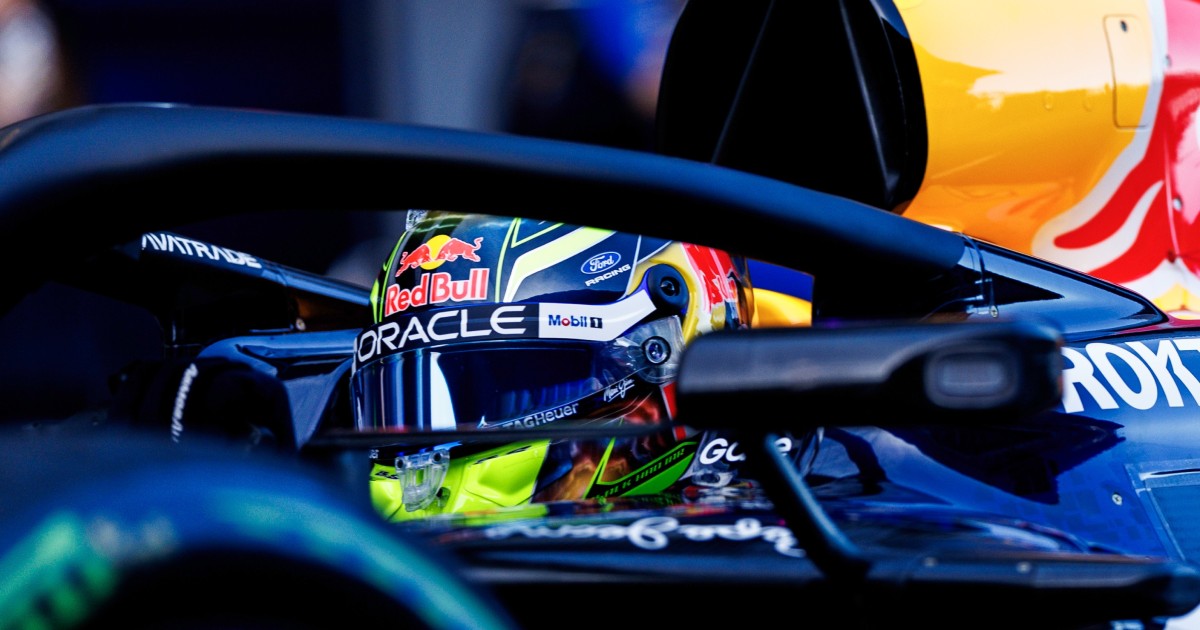
Winter testing: Hadjar tops the first day in Barcelona
On the first day of winter testing in Barcelona, seven teams and nine drivers were on track. Williams did not attend due to the car not being ready, while McLaren, Ferrari, and Aston Martin skipped the opening day.
Teams are allowed to run on any three of the five available days — or not run at all.
It should also be noted that, formally, these are not official tests. The teams organised the runs themselves by renting the circuit. Normally, there is no opportunity to conduct testing outside the official schedule, but on this occasion, teams were given such a chance. The season has not yet begun, with the first official tests set to start in February, and the sport is still in the off-season.
The teams agreed to declare the tests closed to avoid criticism over potential issues during a period of major regulatory changes. Social media activity was also restricted, with each team allowed to publish a maximum of 12 photos and videos. In reality, even fewer were shared.
In the morning, a “pirate timing” feed briefly appeared after an IT specialist from one of the teams shared it. However, once screenshots began circulating widely, the channel was shut down later in the day. Security personnel around the circuit strictly kept fans and journalists away from any vantage points overlooking the track, explaining that all image rights belonged to the circuit.
All of this looked both amusing and disappointing. In any case, it was impossible to draw conclusions from the day’s results, and no one was chasing outright speed — the main goal was simply to complete as much mileage as permitted. Compared to 2014, the number of issues was noticeably lower.
The media and the wider racing community were unhappy with how the first day of the so-called “new era of Formula 1” unfolded. This era had been announced long in advance and was highly anticipated.
As usual, the traditional “duel” took place in the morning: which team would be the first to send a car out on track? After overnight rain, the asphalt was still wet, but the matter was one of principle. At 9:00 a.m. local time, Kimi Antonelli was the first to cross the pit-lane exit line.
For the fifth consecutive year, a Mercedes driver was the first to appear on track during winter testing. He was followed by Gabriel Bortoleto in the Audi, with Franco Colapinto third for Alpine. That was the end of Audi’s runs for the day, as Bortoleto admitted they were unable to continue the program after a technical issue, though the team did not disclose details.
Compared to the first day of testing in 2014 — the previous major engine-change year — proceedings this time were relatively smooth. Teams were keen to avoid any risk. As soon as suspicious telemetry data appeared, cars were immediately stopped. Spare parts are still limited, and any failure could halt an entire program.
On the first day, teams focused primarily on the engines and hybrid systems, with no aerodynamic paint or sensors fitted to the cars. Three red flags appeared in the morning due to issues involving Colapinto, Bortoleto, and Lawson. There were no crashes — in all three cases, the drivers stopped on track on instructions from their garages.
In the afternoon, George Russell replaced Antonelli at the wheel of the Mercedes and initially topped the timesheets with a lap of 1:18.696. Later, teams agreed to extend the test by one additional hour, which allowed Isack Hadjar to achieve the fastest time of 1:18.452. For Red Bull, the main objective was to demonstrate the potential of their first power unit.
Haas driver Esteban Ocon completed the most laps, with 154. Mercedes, Ferrari, and Red Bull/Ford-powered cars covered close to 1,000 kilometers — an excellent figure for the opening day. Audi-powered cars, meanwhile, logged only 125 kilometres.
Testing will continue tomorrow.