2026 Australian GP: Technical Analysis
With the first race of the season now behind us, there are still many details that attract the attention of technical analysis enthusiasts. Here are some of the most notable ones.
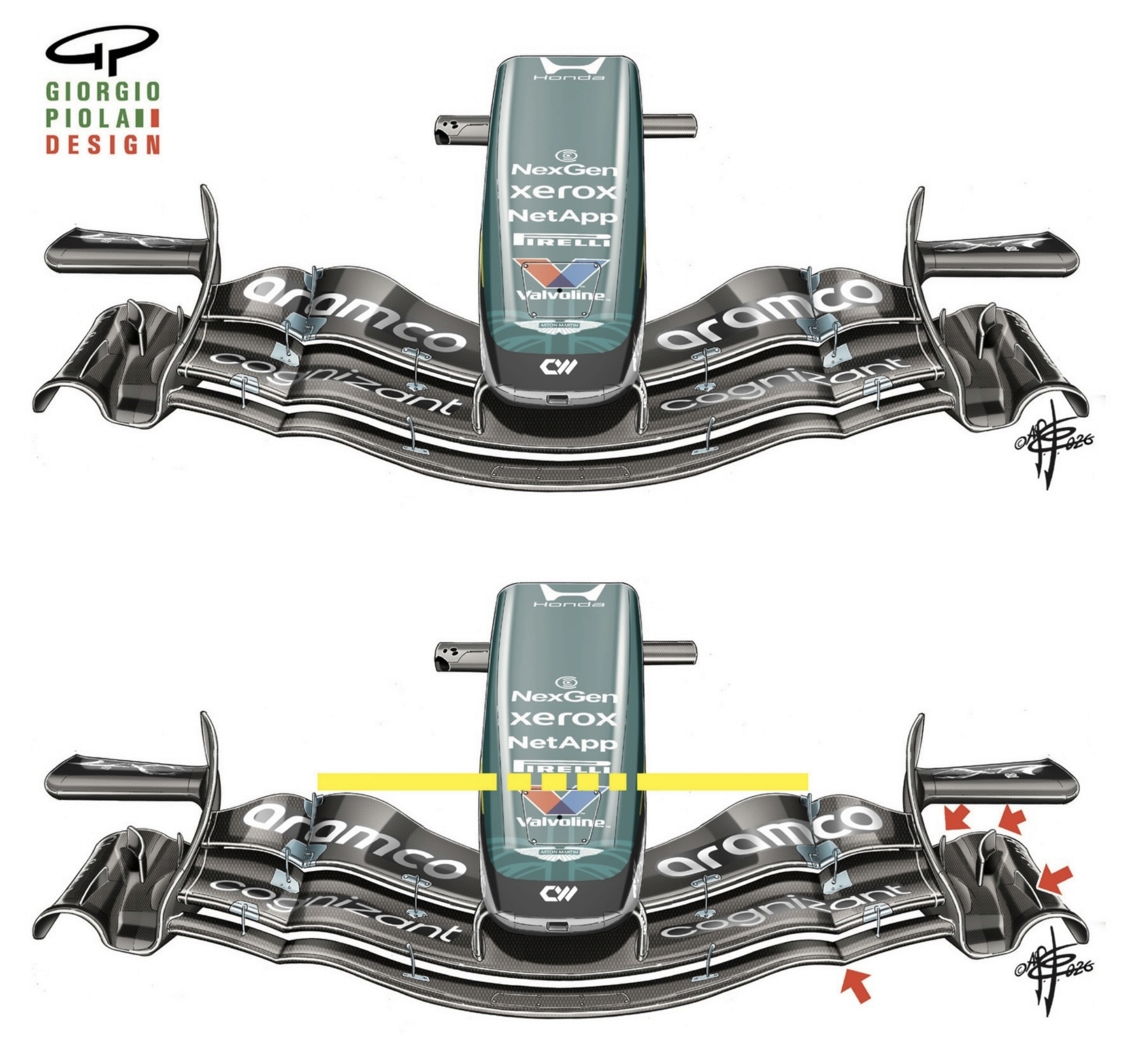
Aston Martin F1 Team introduced significant changes to its front wing. These include a redesigned mainplane, as well as the second and third flaps, along with improvements to the endplate and footplate elements.
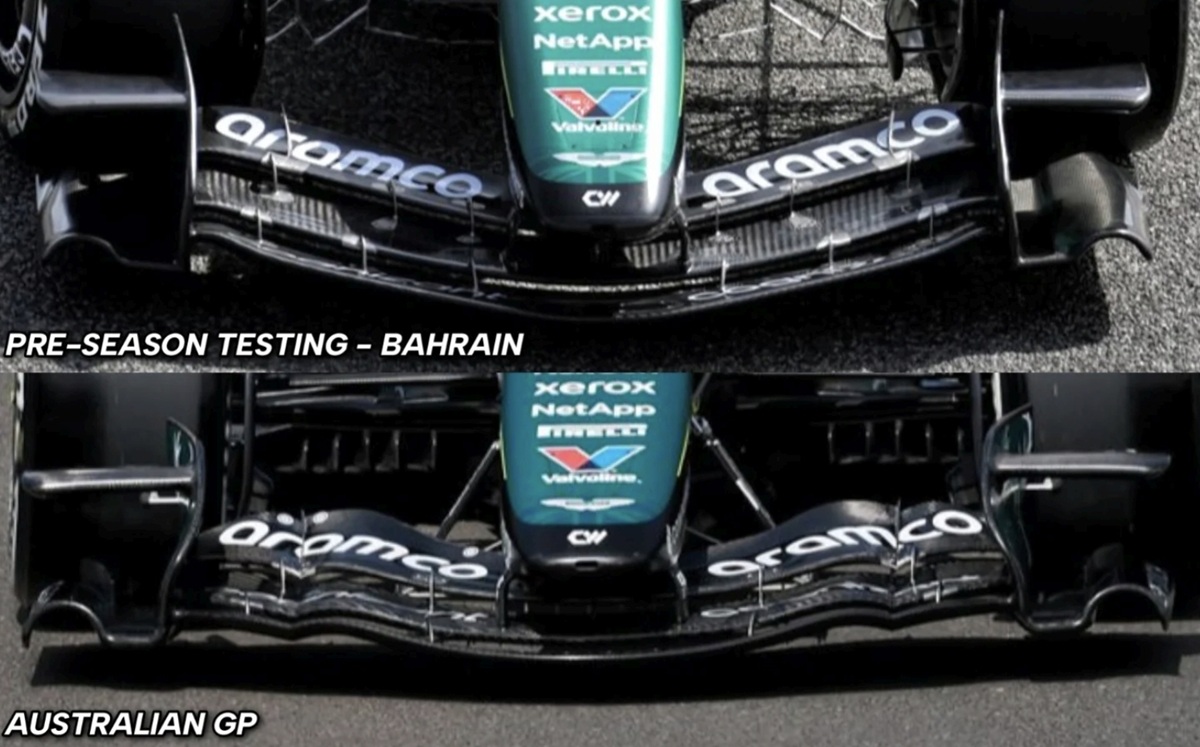
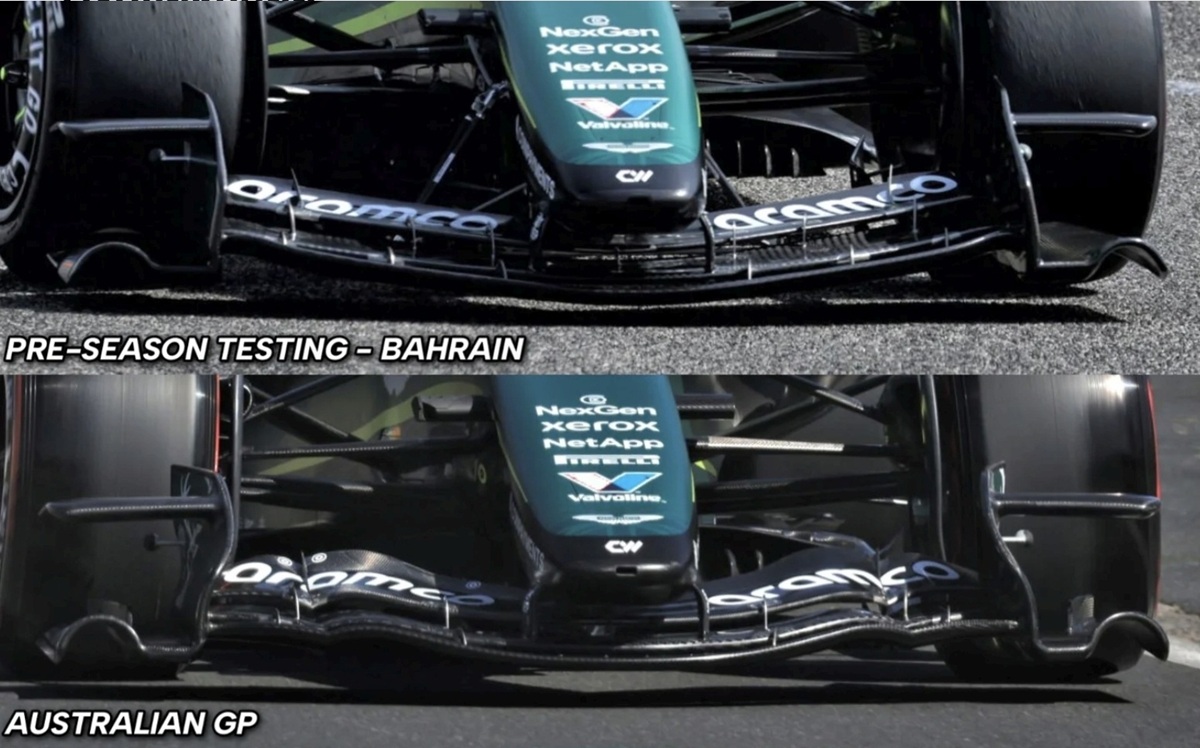
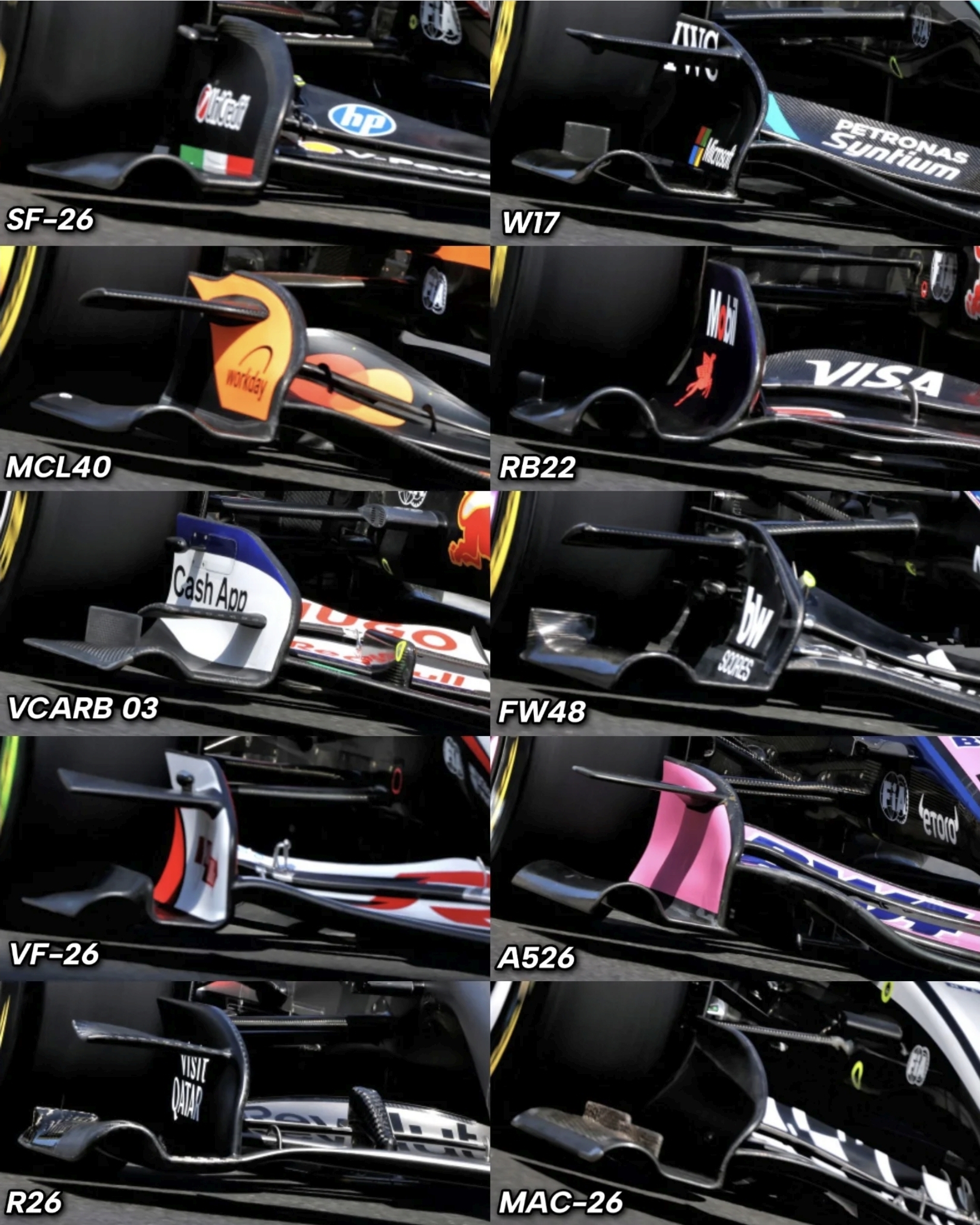
Comparison of the new front wing endplates
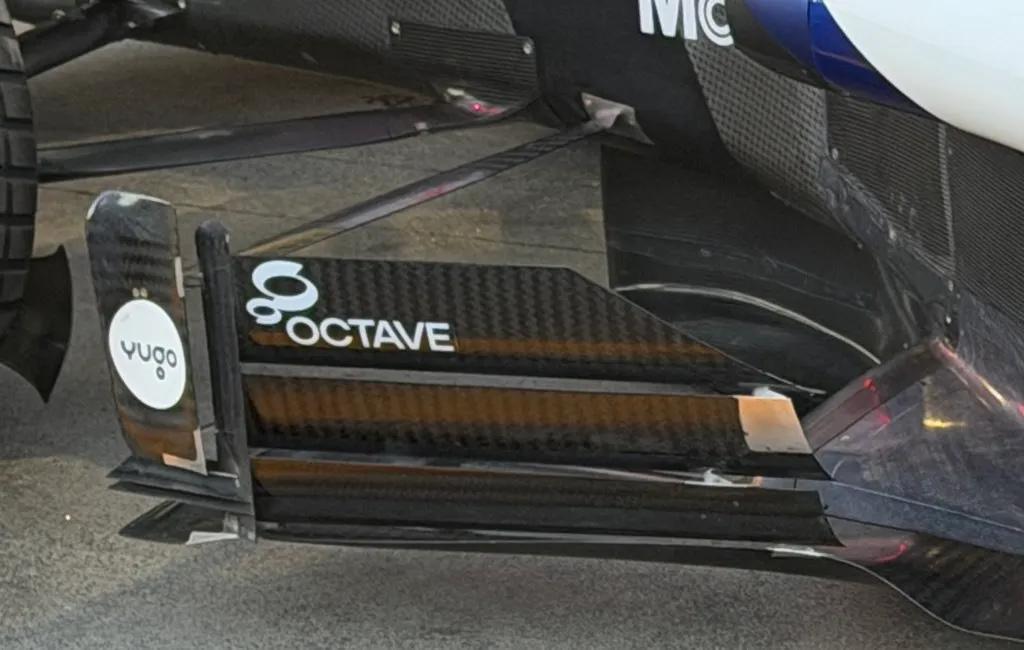
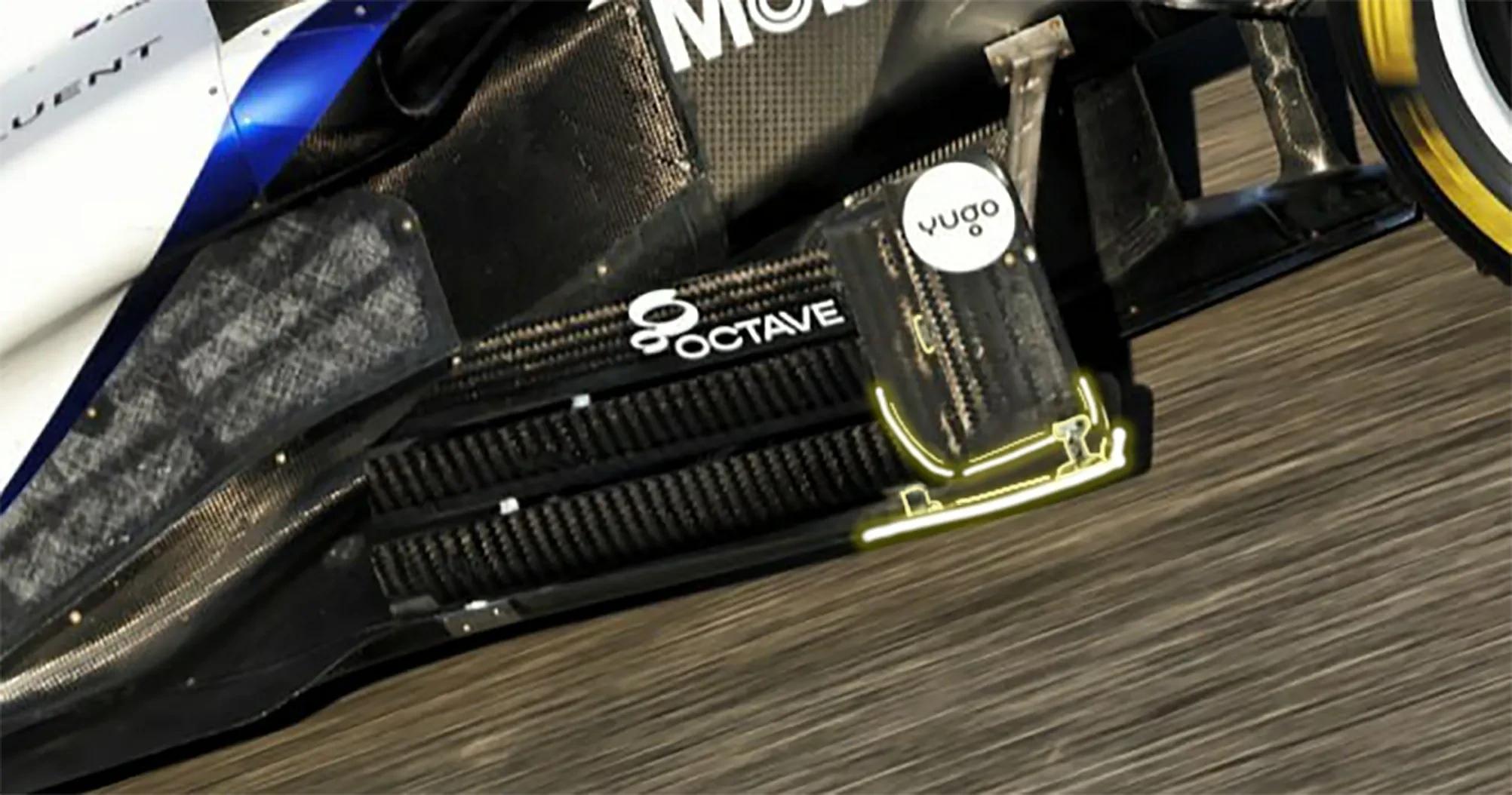
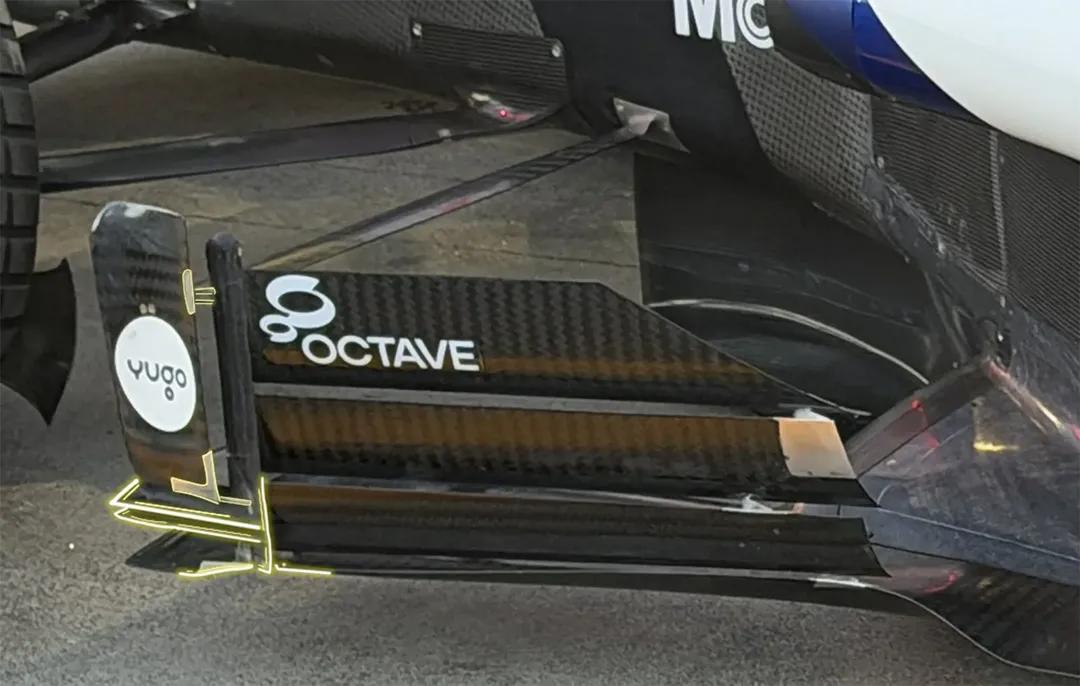
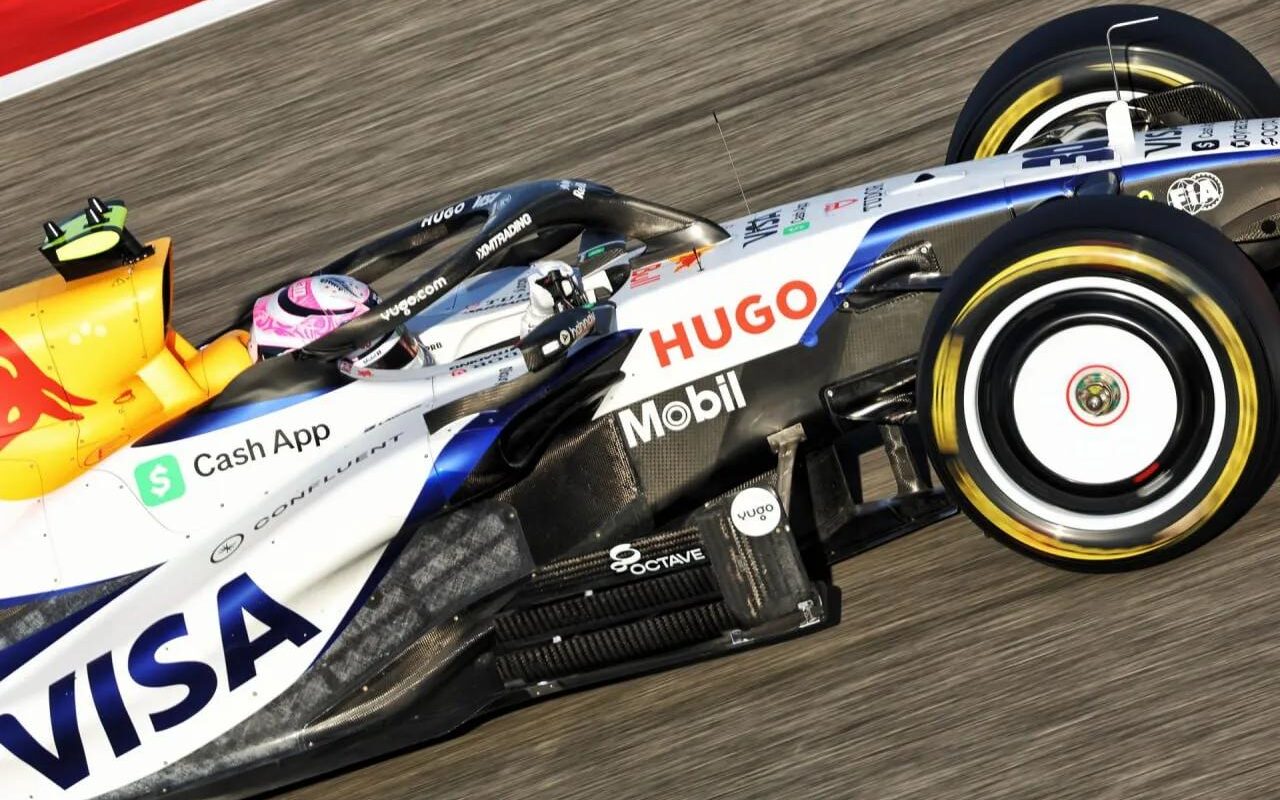
For the Australian Grand Prix, the Racing Bulls team has upgraded the edges of the car’s floor (floor footplate). The length of the first vertical element has been reduced to make room at the lower section for two small winglets. As a result, the position of the metal supports has also changed. Previously mounted on the horizontal main plane, these supports are now attached to the second vertical element. Modifications have also been made to the second vertical element, whose length has been increased to reach the level where it now intersects with the horizontal main plane.
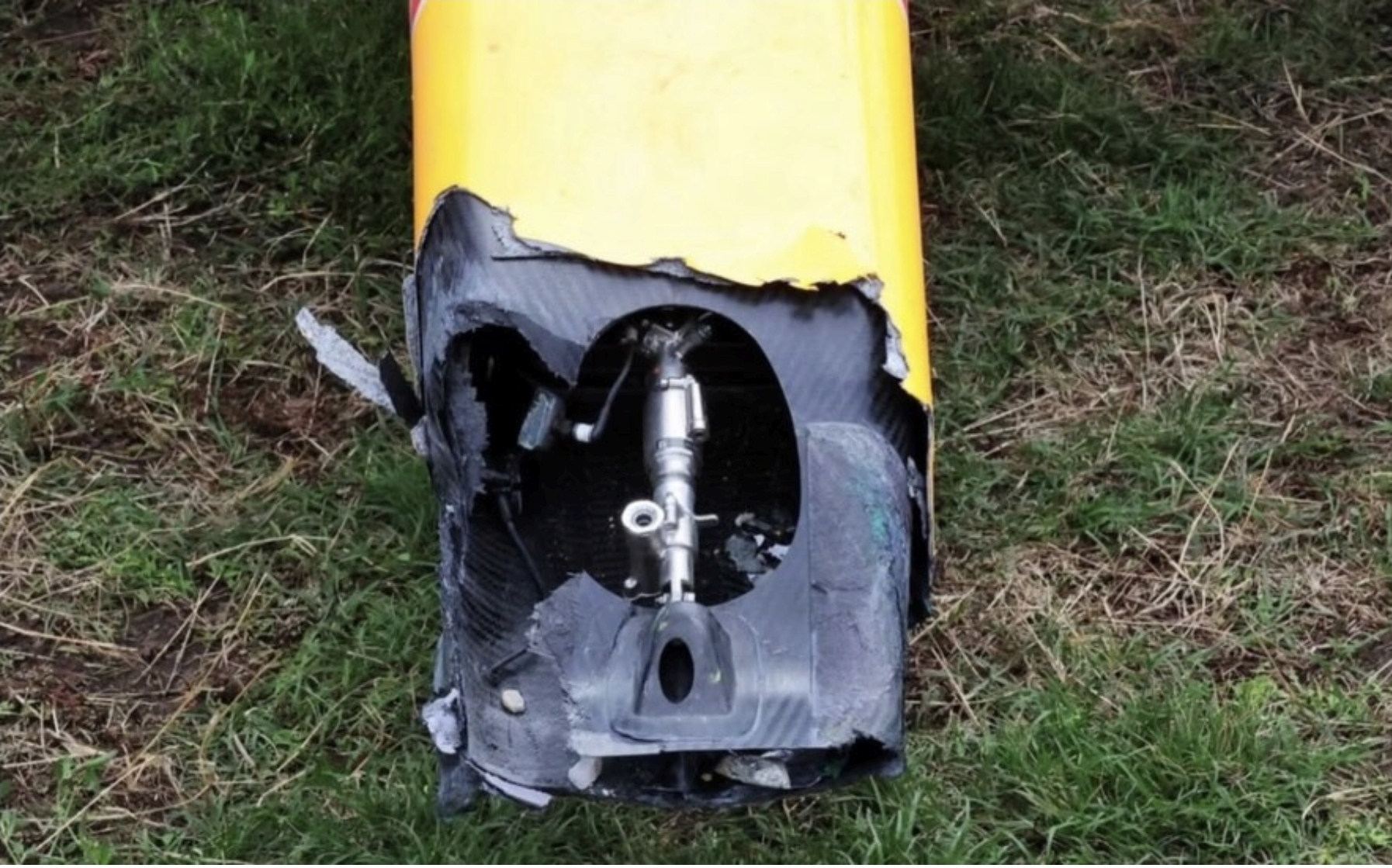
In Verstappen’s qualifying crash, the front nose was damaged, exposing the hydraulic system designed for active aerodynamics. The side slot, which allows the actuator to adjust the winglets’ attack angle (via a key mechanism), is clearly visible.
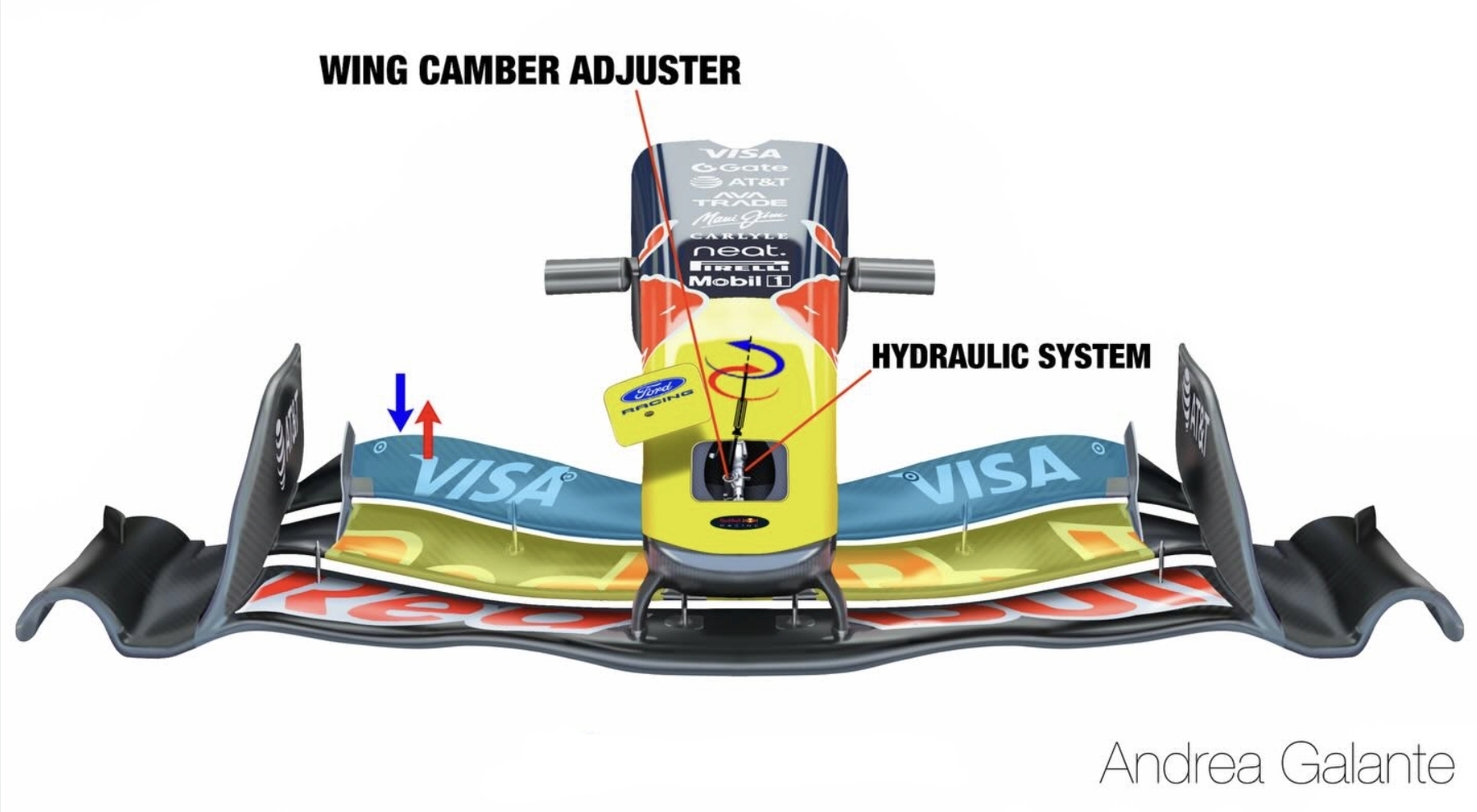
Despite the challenges faced with the AMR26, Adrian Newey has unveiled the most interesting upgrade seen in Melbourne: a new, highly complex front wing designed to optimize the two intended configuration modes—straight-line mode and cornering mode.
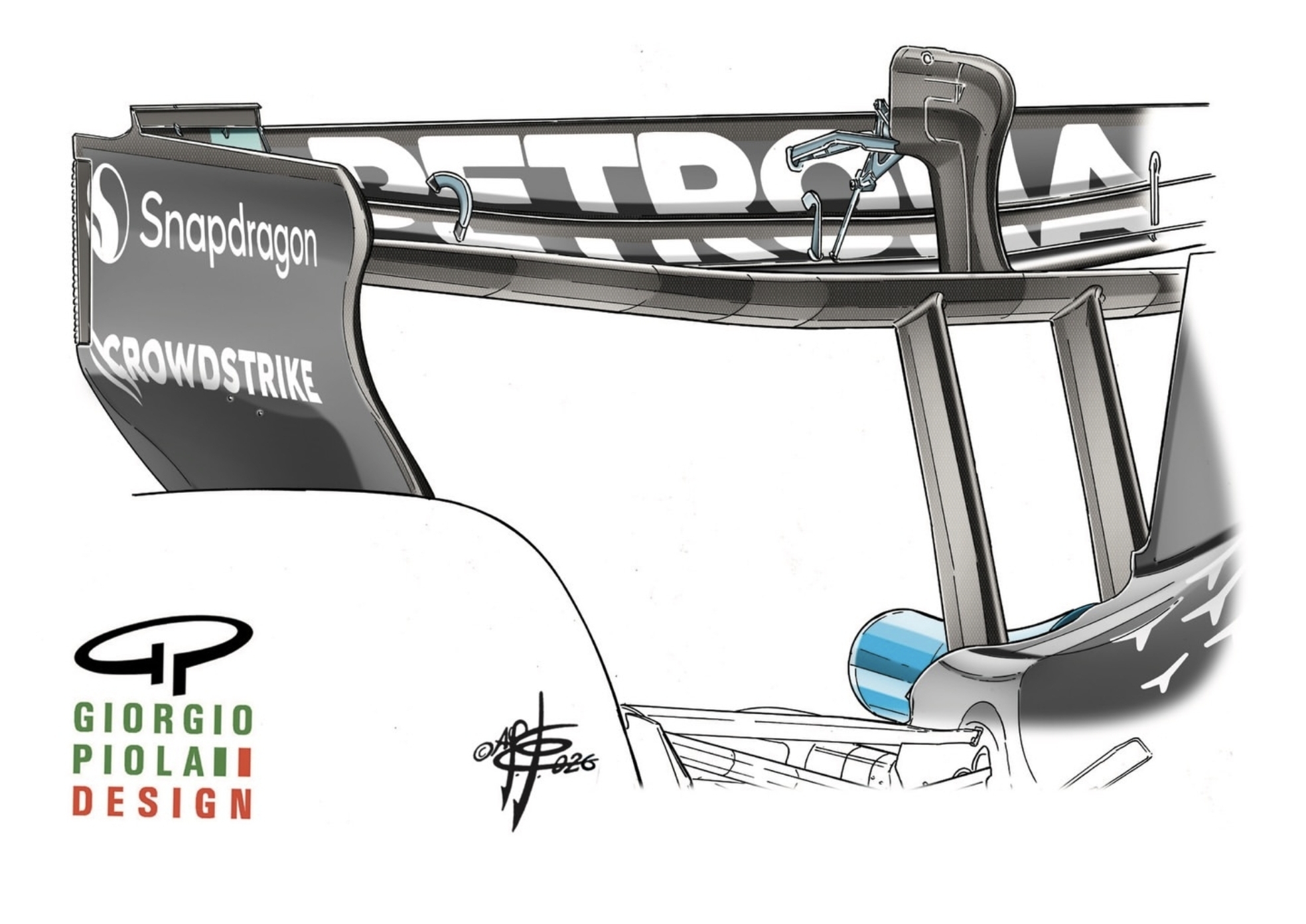
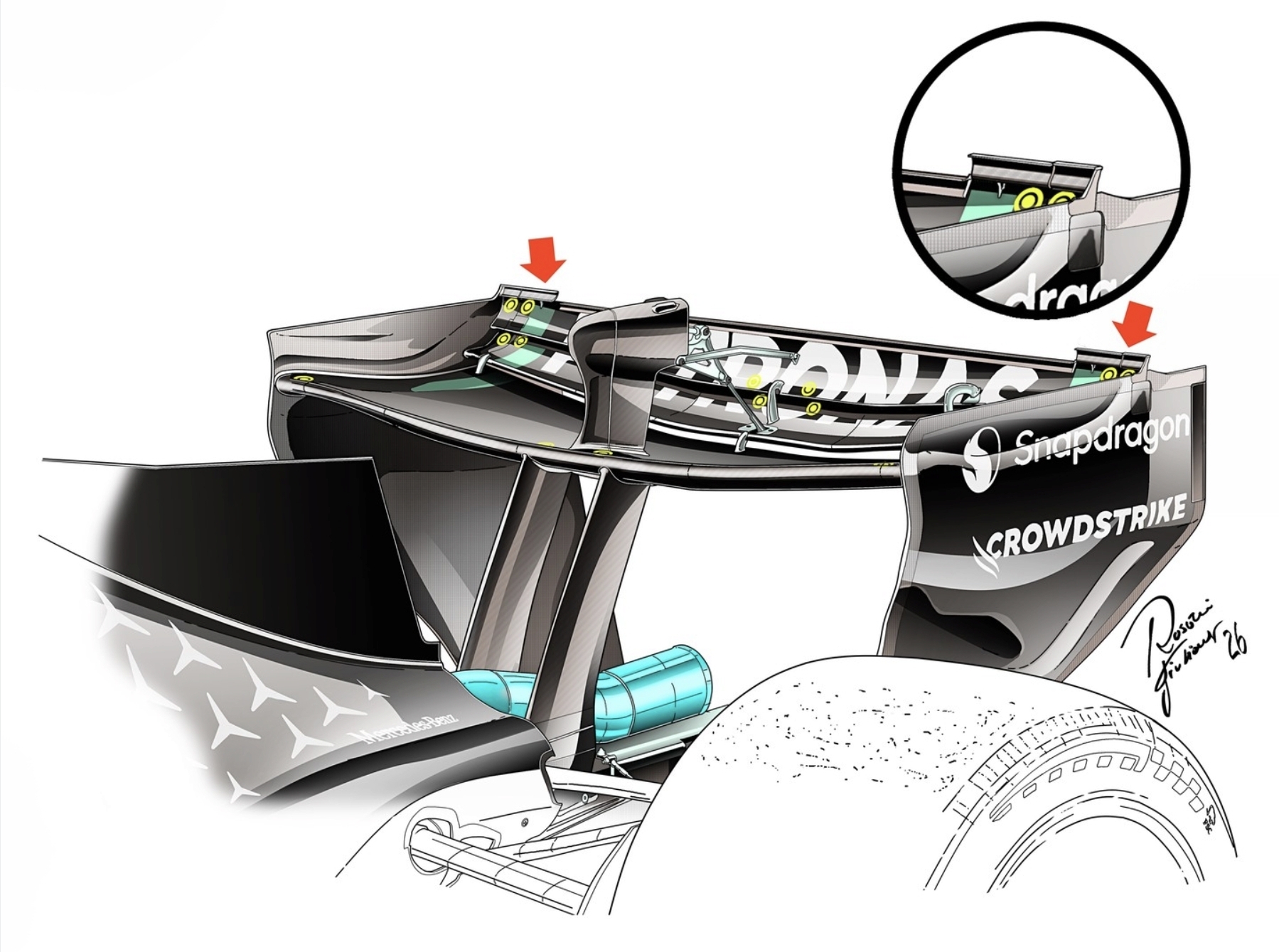
Mercedes raced in Melbourne with the innovative rear wing introduced during the Bahrain tests. The small additional flap located on the lateral sections of the conventional wing interprets the rules for this zone (legality boxes) in a unique way. In addition, the endplates feature a twisted layout.
Technical details explained:
Legality boxes: Geometric boundaries defined in the F1 technical regulations that specify where components are allowed to be positioned. Mercedes’ design attempts to exploit the loopholes within these rules.
Twisted layout: A specialized shape used to manage airflow more efficiently and reduce aerodynamic drag.
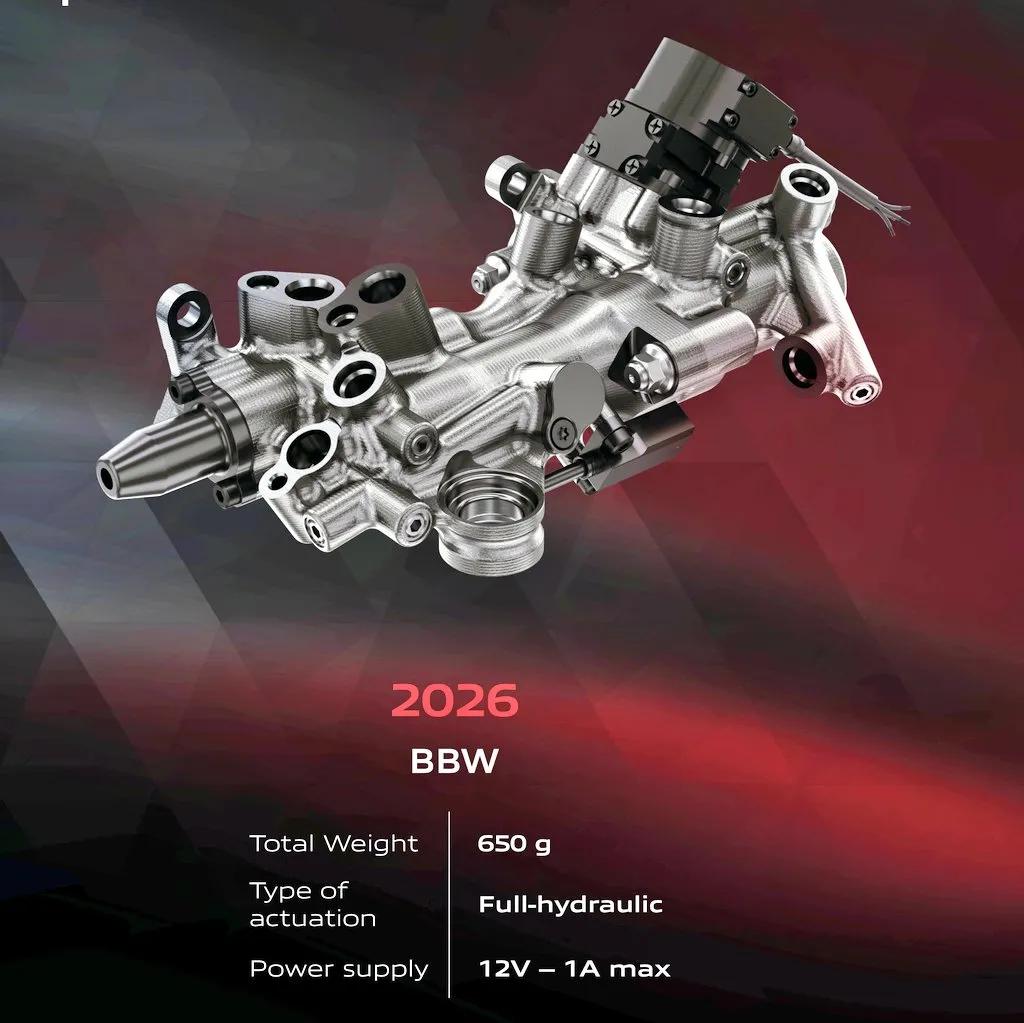
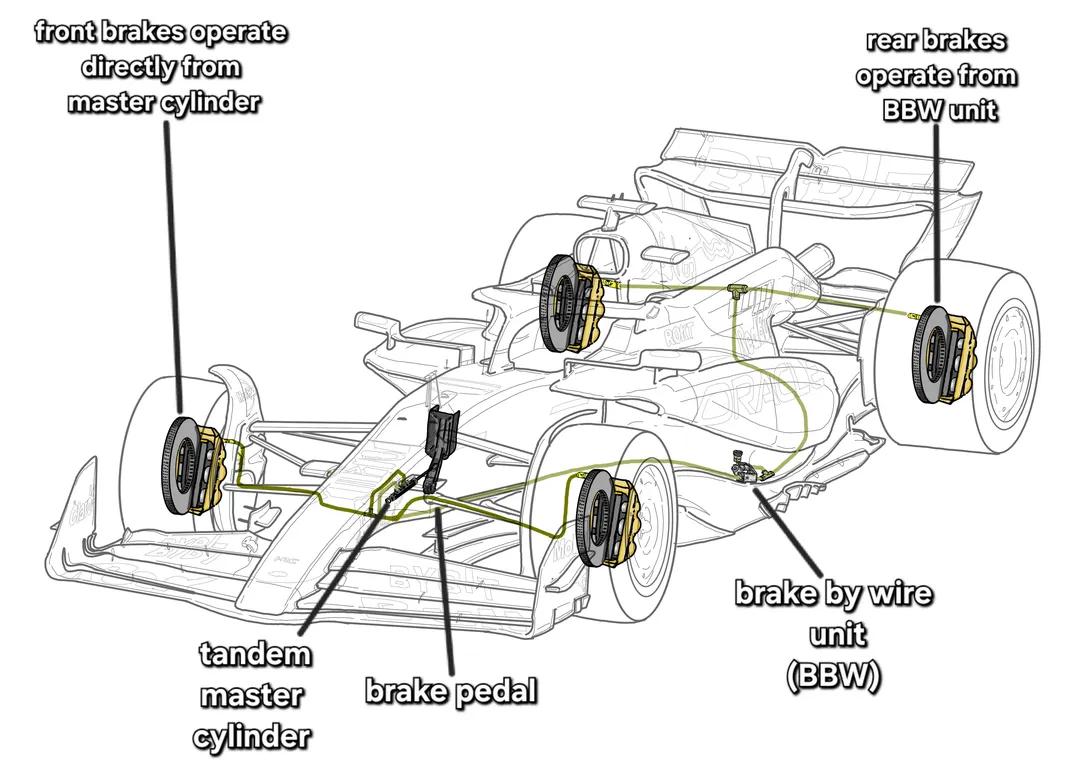
The design of this component of the Formula 1 brake-by-wire (BBW) system, manufactured by Brembo, is free, meaning teams can develop their own solutions. The rear braking system combines the disc brakes with the MGU-K energy harvesting system. The driver’s pedal input is measured by the ECU (Electronic Control Unit), which then regulates the balance between MGU-K regeneration and the required disc braking force via the BBW system.
Technical term explained:
Brake-by-wire (BBW): A system where the brake pedal controls the brakes electronically rather than mechanically.
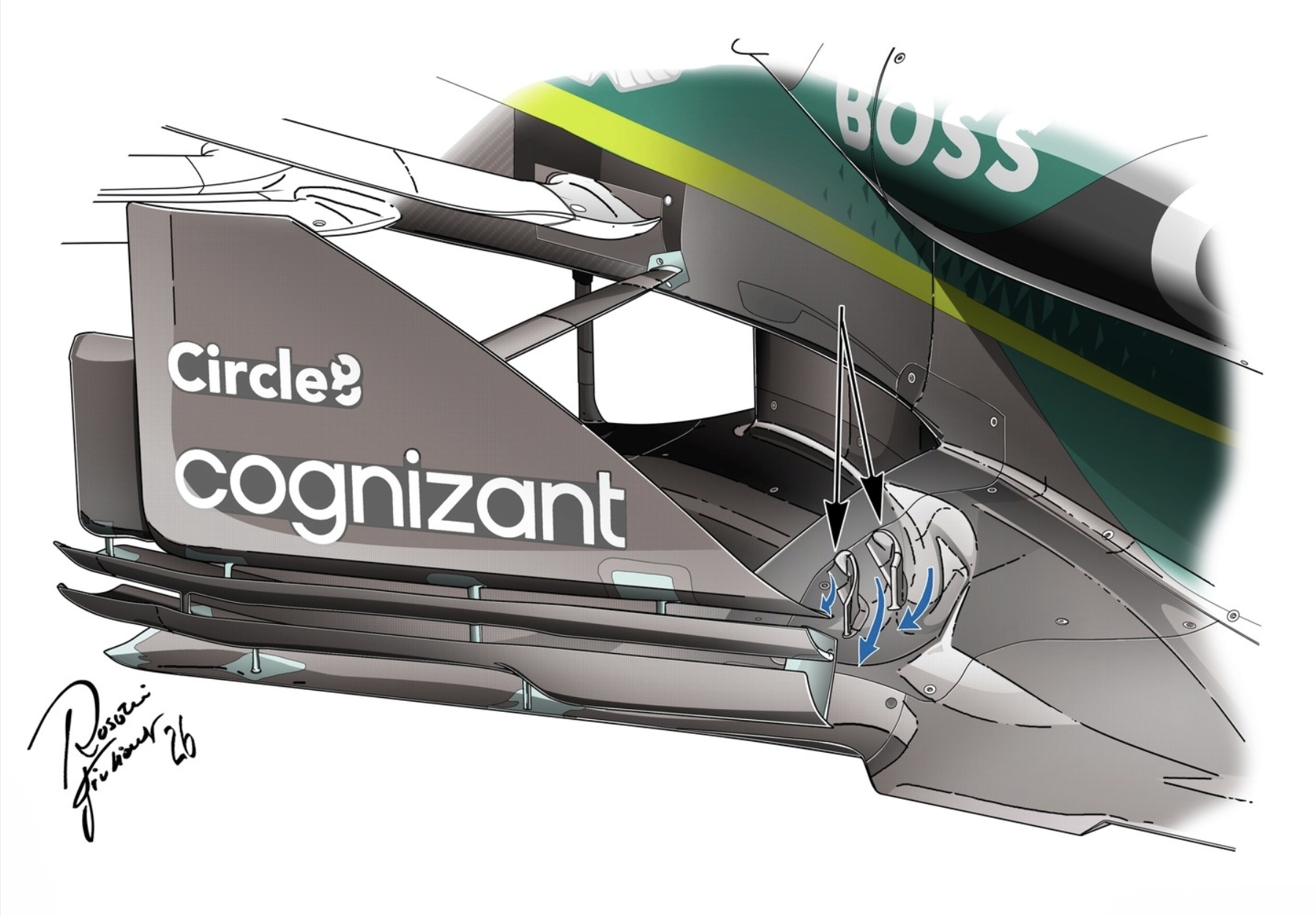
Aerodynamically, Aston Martin is undoubtedly the most interesting car to analyze, and it is truly disappointing that it suffers from serious mechanical issues. In Australia, another intriguing solution appeared at the front section of the floor, featuring two flow directors designed to create an outwash effect (directing airflow outward).
The ingenious component, which operates within the limits set by the regulations (legality boxes), involves reducing the height of the upper floor surface by excavating along the side of the SIS (Side Impact Structure).
Technical details explained:
Outwash effect: An aerodynamic technique used to push airflow around the tyres and outward. This prevents turbulent air generated by the wheels from affecting the rear of the car and the diffuser.
SIS (Side Impact Structure): A safety structure protecting the driver from side impacts. Designers modify the shapes around this structure to optimize airflow in this zone.
Floor Excavation: Creating specific channels or depressions on the upper surface of the floor to allow air to flow faster and more efficiently.
Mercedes dominated the opening race of the 2026 season. The W17’s engine, aerodynamics, and chassis make it strong, despite ongoing talks about the rules and the Mercedes power unit. Mercedes engineers have developed a truly fascinating rear wing, carefully interpreting the limits allowed by the technical regulations: the extensions on the sides of the final flap increase local downforce.
The rules regarding the rear wing are very strict, leaving very little room for creativity in the shape of the mainplane and flaps, which makes achieving such a result particularly difficult. The design of the endplates is also intriguing, with meticulous work on their curvature. Almost all wings follow the same design, featuring a double pylon and a spoon-shaped mainplane; finding any loophole to use different shapes to increase downforce is extremely challenging.
Technical details explained:
Double Pylon: Two vertical supports connecting the rear wing to the car’s body, ensuring greater wing stability.
Spoon-shaped mainplane: The central portion of the rear wing’s mainplane is deeper, while the edges are shallower, resembling a spoon. This reduces drag on straights while maintaining downforce through corners.
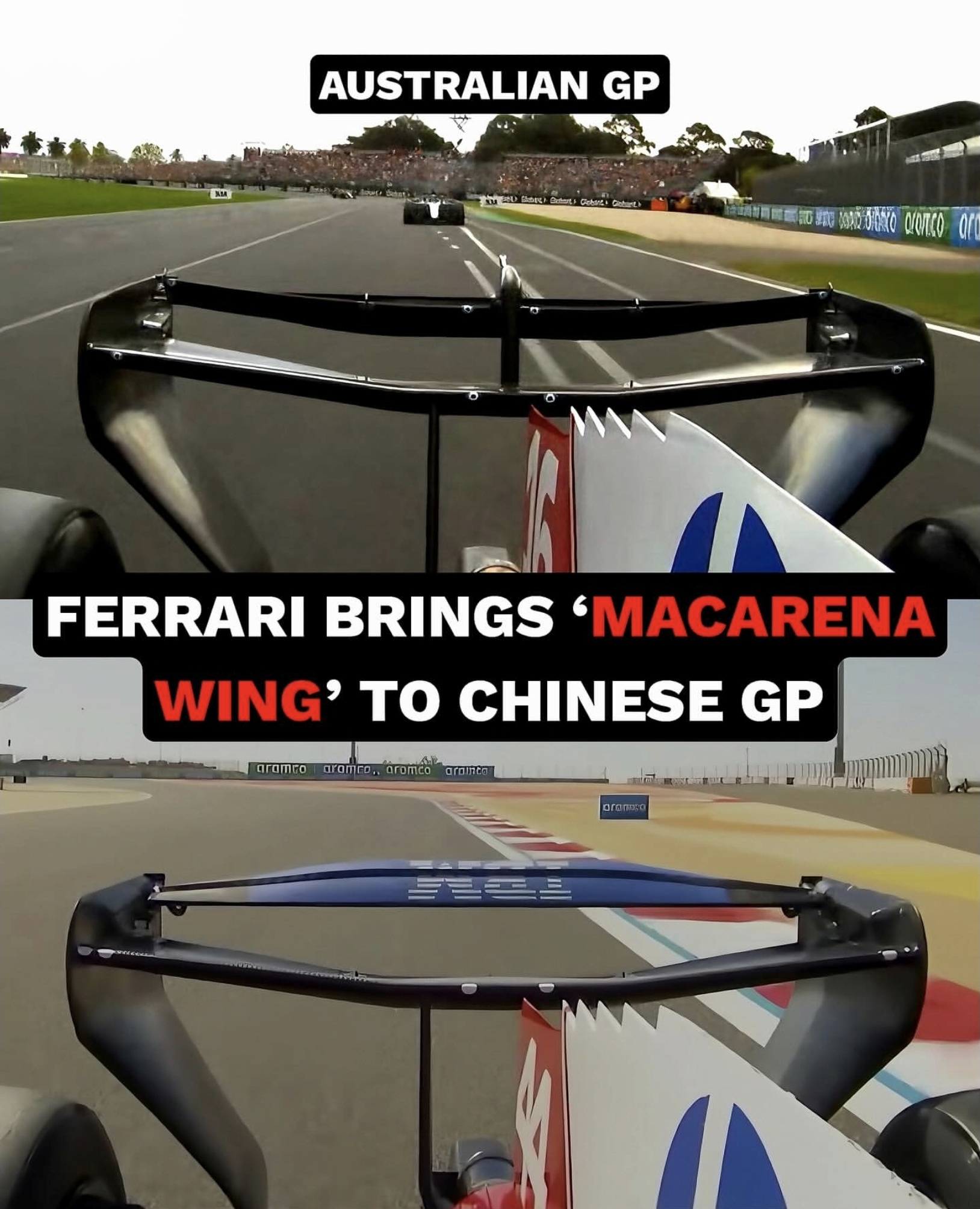
Ferrari has shipped its “upside-down” rear wing to this weekend’s Chinese Grand Prix. However, we will have to wait and see whether the engineers actually deploy it.
Upside-down rear wing: This could be a radical aerodynamic solution developed by Ferrari in response to Mercedes’ dominance. Such designs are generally intended to manage airflow more efficiently and increase straight-line speed.