How will the engine controversy end?
For several days now, the entire motorsport community has been discussing the controversy that has arisen over the switch to next-generation power units in Formula 1.
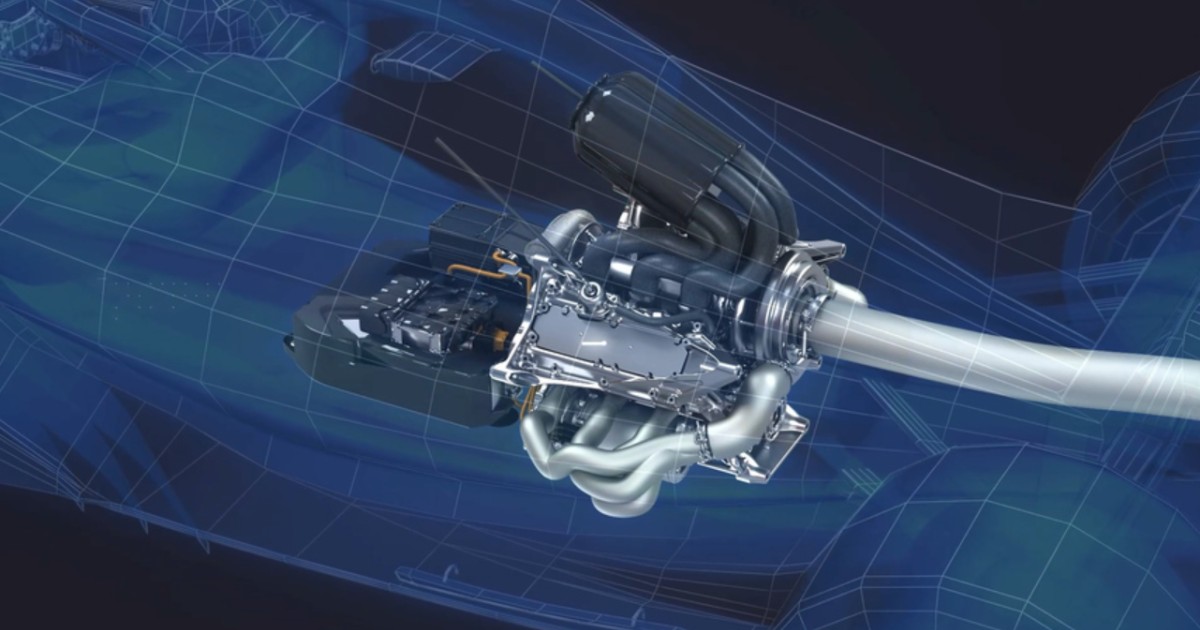
Manufacturers Mercedes High Performance Powertrains and Red Bull Powertrains have discovered a loophole in the regulations, enabling them to achieve a compression ratio of 18:1 during engine operation, despite the regulations’ maximum value of 16:1.
Under the FIA’s current procedures, the compression ratio is measured statically at ambient temperature. At the moment of measurement, the Mercedes and Red Bull engines show compression ratios within the permitted limits, but during operation higher internal temperatures lead to the expansion of engine components, an increase in cylinder volume, and a rise in the compression ratio to as much as 18:1, resulting in an increase in engine output of around 15 horsepower.
In response to this situation, representatives of Ferrari, Audi, and Honda have approached the FIA and requested an investigation. According to the Italian press, the federation has had no issues with the solutions adopted by Mercedes and Red Bull, as the compression ratio measured at room temperature complies with the regulations, and higher values achieved at operating temperatures are considered irrelevant.
Thus, according to sources, the FIA has confirmed that the Mercedes and Red Bull power units are compliant with the regulations and has approved their use in the upcoming season. As noted, the federation bases its assessment on results obtained under ambient conditions and considers them legally valid. Ferrari, Honda, and Audi, however, argue that this approach violates Article 1.5 of the Technical Regulations, which requires cars to comply with the rules at all times during a race weekend.
The dispute is not limited solely to performance differences. The federation plans to measure the performance of internal combustion engines every six races during the 2026 season. If a power difference of 2% emerges between the strongest engine and the others, the trailing manufacturers will be granted additional development allowances. If the gap exceeds 4%, those allowances will be doubled.
Sources indicate that other manufacturers, taking into account the long lead time required to implement changes, may only be able to introduce engine updates in 2027. At the same time, it should be noted that the power units have not yet undergone final homologation, meaning that some manufacturers could attempt to make rapid design changes before the start of the season.
Some manufacturers are abandoning traditional casting methods in favour of 3D printing technology, which allows for the rapid production of components with highly complex geometries. This means that, by following the path taken by Mercedes and Red Bull, it may be possible to partially close the performance gap.
However, any technical modification carries a durability risk. Considering that engines are tested with a minimum lifespan of six races, changes to the combustion chamber could require the entire testing process to be restarted. Moreover, such interventions could push engine manufacturers close to the cost cap limits.
As a result, some brands are expected to wait for the first performance assessment at the Miami Grand Prix, while others may pursue aggressive development without delay. Radical solutions, including so-called “secondary combustion chambers”, are already being discussed in the paddock.
Given that the situation only became public a few days ago, while manufacturers have reportedly been aware of it for several months, it is likely that they have already been working on solutions in anticipation of the FIA potentially finding no regulatory breach in the approach taken by Mercedes and Red Bull.